
Sign up today...
for featured titles, special offers, bestsellers, and more, in your inbox!
Close
Sign up today...
for featured titles, special offers, bestsellers, and more, in your inbox!
 Distribution Programs
 Sales Channels
 Marketing Services
 Digital Services
 Specific Services for Publishers
 Operations
Richard Cahan of CityFiles Press discusses the benefits of independent publishing, his love for Chicago, and how he and co-publisher Michael Williams choose the projects they love.
 IPG: Can you tell me a little about how CityFiles Press came to exist?
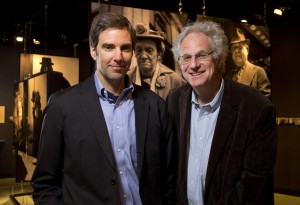
Richard Cahan: Michael Williams (left) and I met at my bookstore, CityFiles Arts and Books, in 2003. Michael had written and designed several books that I admired and I had written several books. We decided then to form a company that produced books that told stories through words and pictures. Since then, we have published 12 books. So far; so good. They have all received great critical reviews and we have a small but strong following.
IPG: Our CEO has said that you have an “uncompromising aesthetic appreciation of cityscapes and urban architecture,”—how does this appreciation manifest itself in the work you publish?
Richard Cahan: Those are really kind words! I think we are funny guys, but for some reason we take our books seriously. Books are very special to our culture and we throw our hearts into them—finding good stories and great work. That’s why we fell in love with Vivian Maier, the Chicago nanny whose photography now thrills the world. And that’s why we just published a book on architectural photographer Richard Nickel, who died in the demolition of a skyscraper, and photographer Michael Abramson, who spent years documenting nightlife on Chicago’s South Side. They are all determined, talented geniuses whose work beg to be shared. How fun is that?
IPG: What is your association with the city of Chicago? What sets Chicago apart?
Richard Cahan: We’ve both lived in Chicago all of our lives—so it’s the world we know best. We’ve been here since the late 1970s as professionals—so we know where the bodies are buried and, even more important, we know where the bodies left their photographs. In some ways, we produce regional books—and we revel in that designation. But as our readers know, you can see the world in Chicago.
IPG: What has your experience been with independent publishing? What are the benefits? The drawbacks?

Richard Cahan: We’ve worked with several big publishers and prefer to publish on our own because we care about our books more than any big publisher with a long list of books can care. We produce just a few books a year—which gives us time to give our books our full attention, from concept through production and distribution. If a book doesn’t work, we scrap it. And if a book does work, we finish it to the absolute best of our ability and promote it because we believe in it. We depend on ourselves. That’s pretty sobering—but it has worked since we started CityFiles Press.
IPG: How do you think the publishing industry has changed since you started out a decade ago?
Richard Cahan: Fewer people are buying books and bookstores are not as important as they once were—which is a shame. But publishers have much more control these days to control their destiny because publicity is in our own hands. No longer do we have to purchase ads. This is an exciting prospect. New technology has also made it more and more possible to design, edit, and create books on our own. Printing in China makes it more affordable.
IPG: What advice do you have for prospective small publishers today?
Richard Caha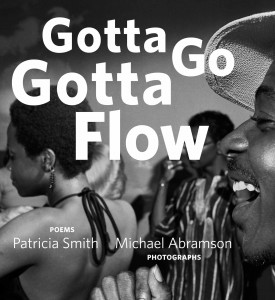 n: Publish books that you really care about. We have a rule here: Both of us need to be 100 percent behind a project before we take it on. Sometimes that means that one of us has to convince the other. That’s sometimes confounded, but it’s healthy. Don’t take on any project that you only like. Only take on projects that you love.
IPG: You’ve said you’re involved with all steps in the publishing process—can you tell us your favorite part? Least favorite?
Richard Cahan:
Favorite: Seeing a book come together. I do most of the writing and Michael does most of the design. It’s a thrill to me to see how Michael takes ideas and creates bold visual statements. If we can’t do that, we give up on projects.
Least favorite: Hauling books to and from events. We always guess wrong—bring too many books or bring too few. But we’ve learned that publishing books have more to do with pushing ideas than pushing paper. And that’s gratifying, too.
IPG: Finally, what’s next for CityFiles Press?
Richard Cahan: The world is open to independent publishers. Big publishers do great work, but publishing firms seem to have their attention on quantity rather than quality. So it’s up to us to find great work. We plan to publish more books each year—including a series of picture books for people with Alzheimer’s and memory loss. That, we hope, will make an real contribution through books.
Leave a Reply