
Sign up today...
for featured titles, special offers, bestsellers, and more, in your inbox!
Close
Sign up today...
for featured titles, special offers, bestsellers, and more, in your inbox!

 Distribution Programs
 Sales Channels
 Marketing Services
 Digital Services
 Specific Services for Publishers
 Operations

EDUCATION
170 Pages, 6 x 9
Formats: Trade Paper, EPUB, PDF, Mobipocket
Trade Paper, $15.00 (CA $17.99) (US $15.00)
Publication Date: September 2014
ISBN 9781937548407
Rights: WOR
Big Kid Science (Sep 2014)
Focusing on solutions specific to science and math education both for K–12 and college, this book explores how students learn in general and helps teachers develop successful techniques for the classroom
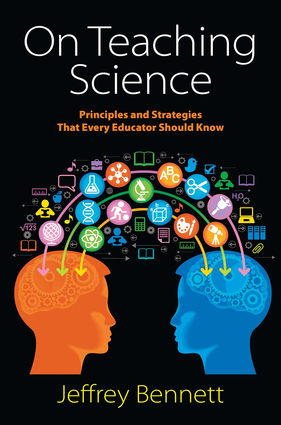
On Teaching Science is a short, practical guide to key principles and strategies that will help students learn in any subject at any level but with special focus on the STEM (science, technology, engineering, and mathematics) subjects. Though aimed primarily at current and future teachers, the ideas covered will be of interest to anyone involved in education, including parents, school administrators, policymakers, community leaders, and research scientists. The book describes how important it is to instill the notion that learning requires study and effort; presents big picture ideas about teaching; provides general suggestions for successful teaching; and includes pedagogical strategies for success in science teaching. With a combination of personal experience and research-based studies to discuss the current state of education in the United States, the author shows how it can be improved through both individual educators and systemic changes.
“Provides a masterful ‘back to basics’ review of true ‘nuts and bolts’ of learning and teaching science. Author Jeffrey Bennett skillfully blends a modern view of the nature of science with insights into student learning forming a ‘How To’ manual that would be of good use to any teacher of science, kindergarten through university level. Dr. Bennett takes on the American cultural rise of multitasking, inadequate study habits, and emphasis on unconnected knowledge tidbits. He builds a case for focused study and conceptual learning orchestrated by teachers who model enthusiasm, curiosity, creativity, and hard work. Science teachers at all levels of experience should read this book and rethink how they operate in the classroom and how they set expectations for students.” —Dr. Alan McCormack, professor of science education, San Diego State University, and president, National Science Teachers Association (2010–2011)
"Success = more and more efficient study time. With this simple yet powerful formula, On Teaching Science is poised to change the national conversation about educational reform. Bennett compellingly argues that educational reforms should be evaluated by whether they increase student effort and study time [...] This approach would not only improve students’ academic outcomes but have long-term consequences for the future of our democracy in which citizens need to contend with issues of increasing complexity. — Dr. Josipa Roksa, associate professor of sociology and education, University of Virginia, co-author, Academically Adrift
"Far and away the best book about teaching I've ever read. Beyond just the teaching of science, this book is a must read for every teacher, parent, administrator, and even student. On Teaching Science will be the gold standard to which all other teaching books will be compared in the future." — Brad A. Shonk, 4th grade teacher, 2010 Mississippi Teacher of the Year
"On Teaching Science is GREAT. It should be required reading for parents and administrators as well as teachers." — Dr. Laura L. Duncan, science teacher, Boulder High School
"A wonderful book, full of useful lessons not just about teaching science, but about teaching and learning in general." —Dr. Scott Hildreth, professor of physics and astronomy, Chabot College
"Dr. Bennett provides both experienced and novice teachers with reflective tools and specific strategies that will help us all improve our instruction and ensures student success. On Teaching Science should be required reading for teachers of all subjects at all levels, not just teachers of science." — Mark Levy, adjunct associate professor of education, St. Johns University
"Bennett directs our attention to the importance of teaching in context and offers rich examples of how that might be accomplished. Even after 35 years in the classroom, I still found new ideas that I can use every day, as well as numerous ideas that will help educators seeking to implement the Next Generation Science Standards." — Bob Feurer, high school science teacher, 2011 Nebraska Teacher of the Year
"Filled with insights into how to teach effectively with a truly positive undertone, On Teaching Science also shows how to open students’ minds so that they will want to learn and will understand the true lifelong impacts of education. A must-read for new and seasoned teachers and professors alike, and a book I wish I’d been able to read before I started teaching." — Dr. Susan Lederer, professor of physics, California State University, San Bernardino, and NASA Johnson Space Center
Jeffrey Bennett, winner of the 2013 American Institute of Physics Science Communication Award, is an astrophysicist and educator who proposed the idea for and helped develop the Voyage Scale Model Solar System—the first science-oriented exhibit approved for permanent installation on the National Mall in Washington, DC. He is the lead author of college textbooks in four subjects—astronomy, astrobiology, mathematics, and statistics—and has written critically acclaimed books for the general public including Beyond UFOs and On the Cosmic Horizon. He is also the author of children’s books, including those in the Science Adventures with Max the Dog series and The Wizard Who Saved the World. He lives in Boulder, Colorado.

